Sunday, October 11, 2009


Shyan Selah’s Hip-Hop Activism

by Ramon Shiloh

Shyan Selah’s love for people is changing lives by the thousands. “When I say I love people, I mean that in all aspects. The good, the bad and all that comes with basic human nature and instinct,” Shyan explains. “I think what makes me unique is that I am sincere with that love of people globally, so it allows me to communicate where no individual is left out. I try to bring that out in my music, my outreach and my philosophy to art.”

As President and CEO of the entertainment company Brave New World (BNW), Shyan has built a successful, multi-faceted enterprise in the last decade that not only operates as a record label, but also offers its artists management, consulting, media and marketing services, as well as music and film production. The company even runs a publishing division.
“Brave New World represents two words – be brave. We want to exemplify the need to reach your potential at any phase of your life,” explains Shyan, who believes that when you become content, you stop challenging yourself, which allows mediocrity to set in. “As a songwriter, teacher or any kind of artist, if you give yourself an opportunity and stay at your bravest level of self, you can make miracles happen every moment of your life.”
This is why Shyan’s heart was aching when he turned on the news February 8 to learn that 19-year-old Chris Brown, a Grammy-nominated singer, songwriter, dancer, video director and actor, was being accused of assaulting his girlfriend, Rihanna, another hip-hop singer. If found guilty, his clean-cut image will be tarnished forever, sending his record deal and pending endorsements with companies such as Wrigley Chewing Gum down the drain.
“There was no reason for him to do this. If Chris Brown had spent a weekend with me, this wouldn’t have happened,” Shyan claims. “He holds the power of outreach for those who have nothing. His Grammy performance should have been skipped because he chose to rock an alternative school for expelled or suspended youth versus skipping it because he got thrown in jail.”
“If you have an artistic gift, there’s a spirit behind that, behind those songs and behind the fans that love you,” he continues. “There’s a responsibility that comes with being an entertainer. That responsibility comes with being a progressive, evolving individual in your own spiritual walk.”

Tackling Youth Violence

Shyan is using his ability to communicate through hip-hop to inspire teens who are affected by violence, whether it is parental negligence, drugs, gangs or physical abuse. Shyan explains that teens need intervention or they are likely to give up on themselves.
“The violence factor is what I wanted to tackle head-on because today there are a lot of angry, frustrated kids mirroring an angry, frustrated society. There’s not a lot of knowledge being shared with teens to get an understanding of their role in America. Kids today are so on edge, all it takes for them to snap is a glare, a word or an emotional spark that could lead them drawing a gun,” Shyan says sadly.
Shyan’s activism and entrepreneurial approach to prevent teen violence and encourage youth to think about their individual accountabilities has garnered high praise from political figures, such as Governor Christine Gregoire, as well as local youth organizations, including the Southwest Boys & Girls Club in King County.
In September 2008, BNW decided to partner with the club in White Center after a string of gang-related incidents impacted club members. BNW has pledged to provide meaningful workshops that utilize music, entertainment and pop culture as an educational format. Executive Director Emily Slagle says the partnership between the two organizations was a “no-brainer.”
“I heard about Shyan and his goals for the Seattle community using hip-hop to engage youth in making positive life choices,” Slagle says. “We discussed how we could partner in teaching kids alternatives to being involved in gang activity, which directly affects the teens and youth of our community.”

Later that month, BNW hosted a Stay in sChOOL event at the University of Puget Sound’s first home football game to influence the use of positive and motivational edutainment in youth curriculum. At the first of 70 high school and 20 college visits, Shyan was joined on the field by Governor Christine Gregoire, her daughter Michelle and Melissa Topacio Long, Washington state’s Democratic Party youth outreach director who all praised BNW’s efforts. Shyan opened the game with the National Anthem and performed his new hit single “Hollywood Blvd” during the half-time show.
“I raise the question every day: Why are people not stepping up to help these kids discuss the real issues in life? The root issues of frustration are why I believe I was meant to do the work I do today,” Shyan explains. “When you see a child finally understanding their role as a budding, responsible contributor in society, it’s a powerful moment to behold.”

From Seattle to Young Black Hollywood

Born in a small town in Madisonville, Kentucky, Shyan’s family moved to Seattle in 1980s, which he believes played an important role in his artistic development. “Seattle is almost cultish. It’s a great city to develop a musical niche. The influential properties exist all around – it’s grey, it’s rainy, everything’s indoors, the people are moody, opinionated, but somehow still liberal. Seattle is a really cool place to formulate who you are. Seattle made an imprint on me. When I moved to Los Angeles to sign my first deal, there was so much Seattle in me. It came through constructively in negotiating and business.”
Shyan also credits his parents with cultivating his artistic confidence. “Whether they were actually aware that they were an influence on me or not, they were definitely at the heart of it all. My father was a huge album collector of all genres of music and I would fall into the art work of those album covers and get lost in them. My mother was a naturally gifted person and to hear her sing early in the morning was incredible. She would just adlib around the house and I would be forced to pick that up.”

His older brother was also instrumental in his artistic growth, introducing him to the early forms of hip-hop in the mid-1980s. “When I was growing up, it was groups like Jodeci, Shai and Boyz II Men that could croon their way to the top of the charts, so I was trying to develop a singing background with rap, which seemed to be tricky, but I managed to exercise those two art forms in time.”
Shyan says he discovered his creative voice when he was ten years old, but never really got comfortable with singing until he reached his teen years. Competing in talent shows is where he defines his true beginning. “It shocked everybody who knew me that I gave up ball for good. But, I believed I had this artistic edge that needed to be expressed from the affinity for people, spirituality and community,” he explains.
Shyan’s creative path led him to friends who were already immersed in the Hollywood scene. “The mid-‘90s was an era known as ‘Young Black Hollywood’, where the Wayans Brothers, Moesha and a lot of Black actors were doing well. I was highly involved in that scene. My friends were very astute in various art forms when I got to Los Angeles. Next thing I knew, I was modeling, on TV, acting and performing.”
But, Shyan says his fairytale suddenly came crashing down the moment reality smacked him in the face. “The driving force that brought me back to Seattle was hardship. While on tour, I made the blessed mistake of impregnating an old college girlfriend. I had this career that was leaping to great heights, but I had to make a moral decision for myself, so I chose to come back home to Seattle. Always looking for a challenge, I thought I could bring a little bit of Hollywood back home. That’s where the real work began in trying to be a parent and build a Brave New World.”

Creating a Brave New World

Shyan says he had a magical moment one day when he was researching charitable contributions on the internet. After reading about the Jimi Hendrix Foundation, he shot off an email explaining BNW’s community outreach programs through music. In less than a month, he found himself sitting as a board member for the foundation.
During this time, the board was charged with rebranding Hendrix to the world in order to introduce the man behind the rock and roll legend. Shyan helped negotiate deals with companies such as Friend or Foe and Barneys New York, which agreed to sell a T-shirt line that presented a bolder image of Hendrix into the marketplace. Shyan is also the driving force behind The Foundation, a series of Hendrix tribute records that is currently in production, which features original music performed by today’s top artists.
In late 2008, Shyan stepped down from the board to focus on his other community outreach efforts, but he says he will continue his work with the Hendrix name by partnering with Liquid Hendrix and Authentic Hendrix, where he has pledged to foster community outreach through music/art workshops and other meaningful social programs.

At the same time, Shyan dropped his debut album, Brave New World, which delivers an edgy sound that infuses funk, rock and R&B inspired by the likes of Hendrix, Prince, Led Zepplin, Tupac and Marvin Gaye. He spent the last month performing at world-renowned and grassroot venues throughout the U.S. and abroad on his Be Brave Tour.
On his first single, “Hollywood Blvd”, Shyan sings about the glitz and glamour of Hollywood that is tainted by drugs, money and the destructive price of fame. After the track was featured on the hit CBS show Numb3rs, Los Angeles clubs and radio DJs took notice. Since then, the single has become a favorite at the hottest L.A. venues, including RnB Live Hollywood at Cinespace, Area, Mood, Forbidden City, Les Deux and Club Monte Cristo.
On January 26, BNW expanded its entertainment operations and community projects to Los Angeles, where the company will continue to offer an independent record label, as well as promotions, productions and media divisions. Shyan explains it is a necessary move if he is to continue in his quest to accomplish BNW’s global objectives.
“Being in the entertainment Mecca of the world gives us an opportunity to do even greater work,” he explains. “From Jimi Hendrix to getting my single on CBS, I was just looking to do the right thing – contribute. I had the right approach and magical moments came out of this.”

For more information about Shyan Selah and Brave New World: 888/927-2838, x130, or www.myspace.com/shyanselah.


© 2/16/2009

Obama’s Superhero Status

by Ramon Shiloh

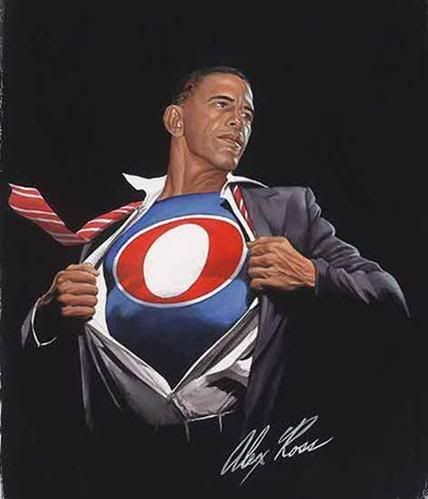
Economic woes, an impending depression and an ongoing war with no foreseeable end are certainly ingredients for a disastrous future. If we lived in the world of comic books, a superhero who possesses great courage, strength and a will to succeed would swoop in and save us all.
Literary heroes can be found in every era. For our generation, President Barack Obama just may be it. His journey to the White House has offered a glimmer of hope for humanity. And, like all true superheroes, the nation’s new president seems to possess a strong moral code and a deep compassion for the human condition.
The nation’s high hopes for Obama to lead us through these difficult times prompted Marvel Comics to honor the occasion on January 14 by having Obama grace the cover of a special issue of Amazing Spider-Man #583. Inside the comic are five pages of Spider-Man and Obama teaming to fight the terrors of our nation. In the end, Spider-Man successfully stops the Chameleon from spoiling Obama’s swearing in ceremony.

Obama is not the first president to be honored in comic books. During World War II, Franklin D. Roosevelt cheered as superheroes fought against Hitler and in 1963, John F. Kennedy appeared in Action Comics #309 to help protect Clark Kent’s secret identity. “If I can’t trust the president of the United States, who can I trust?” Superman asks Kennedy. In 1972, Richard Nixon had cameos in The Fantastic Four and The Incredible Hulk.
“Superheroes are a part of hope,” explains Clifton Alvin Robertson, owner of Secret Fortress Comics, pointing out that Obama’s presidency is all about the need for hope in the United States. “Acting on his promises will save lives.”
Obama revealed on the campaign trail last year that he is an avid collector of Spider-Man and Conan the Barbarian comics because he identifies with the “inner turmoil” the characters experience. Obama may see little of himself in Peter Parker, the shy, studious loner who is devoted to his Aunt May, but, through his alter-ego, selflessly gives to those who are in need.

Comic Books Address Social Issues

One reason comic books have sustained such immense popularity is that they are able to easily reach the masses. Because comics are created for every age group and every educational background, their simplicity allows anyone to relate to the messages.
The first African American comic book character appeared in a two-issue series in 1965. Lobo, created by D.J. Arneson and Tony Tallarico, was a wealthy, gun-slinging, crime-fighting cowboy whose calling card was a gold coin imprinted with a wolf and the letter L. Two years later, Marvel introduced its first African American character – Joe “Robbie” Robertson – in the Amazing Spider-Man. As J. Johan Jameson’s voice of reason, Robbie is still in the storyline 40 later, now serving as the editor-in-chief of the Daily Bugle.
Comic books in Mexico date back to the 1600s, but gained rapid popularity in the early 20th century. During the 1940s, adventure stories became especially popular, as did the pulp fiction plots of the historieta, which were based on the balance between good evil. In historietas, evil is typically represented by easy-to-understand symbols that represent the conflict.
Because of its effectiveness in communicating with the masses, the monito has a long historical use in politics. It has been utilized to promote social programs, such as health, education and public administration, as well as political agendas. The historieta continues to surpass other printed comics in Mexico, as well as throughout a substantial part of Central America and the southern part of the United States.
The social issues that comic books address ensure the genre will always have an audience. Stereotypes of all shapes, colors and sizes have played out before us. Gender, sexual preference, race and religious beliefs are explored, offering an outlet for those trying to assimilate with good intentions. Comic books are not only a tool in pointing out discrepancies of our past, present and future issues, but they also question the purpose of life beyond the need for survival.
The X-Men, Marvel’s beloved comic books-turned-Hollywood films, have been praised by hard core fans and non-comic readers alike. A study on the storyline describes analogies of racism between mutants and humans. The characters portray a variety of nationalities, including African, Vietnamese, Native American, Irish and Japanese, and they express a wide diversity of religious views and sexual preferences.
The tale of the X-Men serves as a bridge to unify humans and mutants who have opposing views with each other. In line with the realities of today’s society, the X-Men serve as metaphors for the nature of the outsider to assimilate in an effort to overcome the barriers of bigotry.

Can Obama Be Our Superhero?

As the nation’s first African American president, it’s easy to see why Obama connects with his comic books. Behind the adulation is a man who stands alone, navigating his way through unknown territory. This means his presidency will come with some bumps and bruises. His youthful appearance, age, experience and race have been repeatedly questioned and he certainly faces an uphill challenge as he deals with the residual effects of former President Bush’s Administration.
“Obama’s carrying a lot of weight on his shoulders. It’s like being the only Black guy in an all-White high school yearbook. If you mess up, we know where to find you,” says one Seattle comic book store owner. “Obama is a man I want to succeed. He’s reminds me of a superhero. This country needs a superhero and Obama’s presidency is a great beginning, but compared to the massive debt our former administration left behind, we have a lot of work to do.”
“Presidential campaigns aren’t ultimately about candidates’ job histories. Campaigns themselves are a gauntlet in which you get tested. People get to see how you handle pressure and how you react to complicated questions,” said Obama’s Political Strategist David Axelrod in an interview with USA Today last January. “It’s an imperfect and sometimes maddening system, but at the end of the day it works, because you have to be tough and smart and skilled to survive that process.”
With the United States divided between a dwindling economy and a lengthy war abroad, Obama’s stature just may begin to take on mythic qualities if he succeeds in conquering the challenges ahead. This is comic book folklore.


© 2/7/2009


The Evolution of the Musicianship of Omar Torrez

by Ramon Shiloh

On September 3, 1995, Seattle native Omar Torrez sealed his fate as the “Latin Hendrix” when he became a finalist in the National Jimi Hendrix guitar competition during the annual Bumbershoot Festival. Revealing an awesome display of technical talent and delivering an infectious blend of exotic rhythms, an unknown Torrez brought a crowd of thousands to its feet.
The subsequent praise from the media, including being named Best Band in the region by Seattle Weekly readers for three consecutive years, helped Torrez capture the attention of the music industry. When Fender guitars signed him to an exclusive endorsement contract, the legendary label called him “the company’s most exciting rising star.”
When asked how it feels to be linked to Hendrix, Torrez points to three things that made the eccentric rocker an American idol. “[He had] masculine technical commands, with an occasional feminine touch and a lot of sexuality. That’s what I bring on stage, as well,” Torrez laughs. “I have students who want me to teach them to play guitar with their teeth and I just want to say, ‘That’s not what he was doing!’”
A virtuoso performer, Torrez’s commanding presence is a force to be reckoned with. His biological heritage ranges from Spanish and Basque bloods, via Mexico, to Norwegian, Native American and Russian. In a never-ending quest to find authentic rhythms that fuel his soul, his fusion of funk, rock and blues, mixed with a dollop of Latin beats, offers a pulsating rhythm that can whip any audience into a frenzy.


Redefining His Music


Torrez’s father, who was born in Puebla, Mexico, met his mother as an exchange student at the University of Washington, where he studied under Jacob Lawrence. His mother also earned a Fine Arts degree. Torrez says his fondest memory as a child was when his parents would set up an easel for him in one of the art departments so he could sketch a nude life drawing.
He also recalls performing for his parents’ friends whenever they would drop by. “My father would entice me with ice cream. I guess I would go off on these monologues, tell them about the history of the Sasquatch, or I would sing a song about being a rock and roll star, something like that,” he says. “For me, growing up in an artistic environment was the norm. I faced the simple pleasures of my childhood, but when I would go to someone’s house that didn’t have an instrument or paintings with art supplies, I would think it was strange.”
Although Torrez had a nurturing environment at home, he says that he never really felt like he belonged anywhere. “It’s strange. I always felt connected to older people than my peers. So, there was a little insecurity at certain levels. But, I knew that in time, there would be things that people would respond to that would give me the leverage to hone my creative flow.”
Still, when Grammy Award-winning singer, songwriter, composer and actor Tom Waits personally called Torrez to ask him to perform as the lead guitarist for the Glitter and Doom Tour this past summer, he almost hung up the phone. When he realized the call wasn’t a practical joke, old uncertainties threatened to hold Torrez back from pursuing his dreams.
“It made me a little self-conscious when he asked me to go on tour with him ‘cause in reality, I would watch Angus Young [of AC/DC] and think to myself, ‘Why can’t I just do one thing and kick ass at that?’ In a way, it’s so refreshing and simple. But, I realized it’s just not me,” Torrez says.
Eventually, Torrez says the nod from the legendary performer was enough encouragement to join the tour. Jamming with Vincent Henry on woodwinds, Casey Waits on drums, Patrick Warren on keyboard, Seth Ford-Young on bass and Sullivan Waits on clarinet, Torrez says he went through a major transition emotionally and spiritually. He admits his decision forever altered the course of his music, showing him how he was to transition his musicianship into a more gritty style of play.

AUDIO: Hear a stunning two-hour performance by the iconic singer, Tom Waits, backed by Omar Torrez and the rest of the band, during the Atlanta, Georgia, stop on the 2008 Gloom and Doom Tour (Courtesy of NPR.org):


Although industry insiders have dubbed his June 2008 release of The Beat Outside an instant classic, Torrez says he regrets making the album before joining the tour. “Not because it was bad, but because Tom changed my whole outlook on my style. On my last record, I tried to slice off all the things I do best. It is almost like Tom was sent to show me some things,” Torrez says humbly. “I mean, he’s the Stephen Hawkins of music. He takes any style he wants and makes it his own.”
Torrez says he spent much of his time observing Waits, studying his approach to the psychological, theatrical and technical aspects of being eclectic. “I have a lot more fun now being eclectic, instead of worrying about putting one song next to another and judging the segues in between. What I learned from Tom was that you can’t throw things together. It needs to come from a place that makes sense artistically.”
The last performance on the tour was Torrez’s first time in Dublin, Ireland. “The last night was heavy. Dublin is such a wonderful place. It’s vibrating with music and soul,” he recalls. “We didn’t need to save ourselves for the next night, so we threw down hard and heavy. When I played the last song with Tom Waits and the band, it was like saying goodbye to old friends. It was a deeply emotional experience.”
In the following months, Torrez says, he began to feel that he had made a mark on history. “[The tour] was an incredible opportunity and a real learning experience. It wasn’t like I was with Christina Aguilera, where I was just making a paycheck. This was a chance to play with an immortal figure and witness another world and a piece of history. In some capacity, I feel like I was accepted into the University of Geniuses. For four months, my life was blessed by the best.”

There’s Freedom in Expression

On January 24, Torrez returned with his band to Seattle to play the stage at the Triple Door. The four-piece band, which formed in L.A. in 2007, consists of John Wakefield on percussion, Tige DeCoster on bass and Emiliano Almeida on drums. The Omar Torrez Band can be found playing a number of diverse venues, including the beloved Temple Bar in Los Angeles and the annual Bumbershoot celebration in Seattle.
Last year, the Omar Torrez Band opened for Jethro Tull at the Island of Light Festival in Moscow, Russia, where the guys played for a crowd of 8,000 screaming fans. Torrez has also shared the stage with such musical giants as The Buena Vista Social Club, Pancho Sanchez, Susana Baca and Francisco Aguabella, as well as such underground favorites as Indigenous, B-side Players and Sidestepper.
The band is currently working on a new album, Corazon de Perro (The Heart of the Dog), which promises to be grittier and riskier than his other albums. After his experiences this past summer, Torrez realizes that he must strip down the layers of his music. “I see where my path is going,” he explains.
“I’m thinking about my art form more conceptually now,” he continues. “I like to think of my future works as ‘narrative driven music.’ I try to treat each piece of music as a miniature film, each instrument like a character in that film. This album will be like fiction pieces. The novel is designed to understand the fragility of life. Fiction is connected to reality. I want to create a little world through these songs. With the other albums, they were basically testimonials of my life. That’s not as interesting, because when you place the lens inward so much like that, you can get lazy. I found that if you build narratives, or characters of stories, it’s easier to touch on truths since you’re not looking at yourself. When you write through the lens of someone other than yourself, you’re free to express yourself. This is a new step for me.”


Learn more about Omar Torrez at http://www.omartorrez.com/.


© 2/2/2009

Thai Woodsmith Discovers Independence

by Ramon Shiloh
If you find yourself wandering the northwest part of Seattle, you have entered the neighborhood of Ballard, home to a thriving shopping district, quaint cafés, small boutiques, mom and pop pubs and a farmer’s market. On the corner of NW Market St. and 22nd Ave. NW sits Enlighten, a small gallery filled with handcrafted items that are quickly becoming prized for their creativity and originality.
Owned by Kalan Intawong, the environmentally-friendly home décor store offers contemporary furniture with a rustic twist. One brick wall is lined with recycled wood shelves that hold nontraditional Thai carvings, while the middle of the gallery is filled with curvy tabletops and tree stump chair stools.

Most of the pieces he creates is fashioned from natural bamboo and teakwood gathered from old buildings in Asia. He particularly loves teakwood because of its endurance, reliability and workable qualities. Living in a city like Seattle, its resistance to the weather is an added bonus. Intawong believes his customers are drawn to his handcrafted items because they connect with the organic nature of his carvings.

An Artist is Born

Intawong was born in Thailand’s Chiang Rai Province. His mother, who performed various duties as a nurse, also worked for the government and dabbled in business. His father, a government official, was a practical man who did not favor Intawong’s artistic endeavors.
“My father always told me, ‘If you become an artist, you’re going to be starving for the rest of your life.’ He believed having a steady job guaranteed that you were going to have a check at the end of the month,” Intawong says.
But, as a college student, Intawong found a way to nurture his creative and practical sides by studying Industrial Design.
“I love being an artist and a businessman, too. It was hard to juggle both in the beginning, but my belief is to have fun in both worlds and find a balance – or you’re going crash,” he says.
Intawong moved to Seattle to be with his wife, who lived in Thailand for two years as a Peace Corps volunteer. “One day, she shocked me by asking if I would like to be with her in Seattle. I thought ‘Yeah I love her!’ And, I wanted to see what was happening in the United States,” he says.
After a Thailand wedding ceremony in April of 2002, Intawong and his wife set off on a nationwide tour of the U.S., starting in Washington, D.C., where Intawong met his in-laws for the first time. The newlyweds spent a month traveling the northern portion of the country by car, stopping to see anything that interested them.
“If you’re going to move from another country, you might as well learn as much as you can. The road trip was amazing! Being on the road that long was a refreshing look at the opportunities ahead,” he says.
And, while he explains the different cultures that he encountered were amazing, there were moments that caused him some concern about his new home. “There was this bar in Montana and everyone had blond hair, except me. At the moment I walked in, everyone turned and stared pretty hard. Obviously, I didn’t belong there. It was like I just flipped from seeing the most extraordinary sights on the road and bumped into a roadblock of confusion. I don’t believe I was feeling racism, but I definitely felt uncomfortable. But, after 15 minutes of not getting served, you need to think ‘OK, get back to reality and know you’re never going to see good things all the time.’ We moved on, ready for Seattle.”

Bright Horizons in Seattle

A new independent life in Seattle meant Intawong could be anything he dreamed of becoming. That included becoming an artist.
He began testing the market with small pieces – such as the table lamps he still sells in his store – at art fairs, farmers markets and other local shops around Seattle. “When I came to the U.S., I wasn’t sure where I was going with my art. Then, people started coming around telling me ‘you can do this for a living’ and I realized it wasn’t a bad idea,” says Intawong, who constantly sought feedback from his customers and worked out an affordable price for his art. “After two years, I felt confident on what to focus on. I learned a lot.”

In the spring of 2004, he opened the doors to Enlighten. “I have this wonderful store [because] local people support me. If there’s anything I can do to support them, that’s why I’m here. I’m about community.”
Intawong believes that if he had not left for the United States when he did, his future would have been sealed as a government employee or working for someone else. And, although his woodwork was respected in Thailand, he says, “Americans seem to appreciate it more.”
“I feel I have more strength and control over my life in the U.S. than in Thailand,” he explains. “Back home, these lamps are everywhere. It is hard to make a living when everyone is doing the same thing. Sometimes with a small community, it’s just hard for you to shine.”
Still, he admits to missing his family every single day. “When I look back and think about my homeland, I miss everything. I mean I love Seattle. The people here are so open to different cultures. But, when I think about my homeland, I think about how my people are focused on family first. I miss that connection.”
Last week, Intawong also opened his first restaurant, Root Table. Just like Enlighten, his approach to this new venture is a welcoming attitude. “When you come to my restaurant, I want you to feel like you’re visiting a good friend’s house, with an accepting atmosphere and not intimidated by new faces. This is your home, too.”

The dining room is filled with Intawong’s wood grain tables, which look as if he nurtured the roots of each tree to life. The eclectic menu features the Double-Fisted Duck, which is marinated in dark beer and Chinese wine, as well as small plates under $10.
“I really never think about the future. You don’t need to forget about the past. Just to be you at this moment is to be happy. Even through life’s frustrations, try to entertain your life with positive thoughts. I never pictured myself ten years from now what I was going to be. For me, being creative is the greatest gift. I’m living the life I want right now.”


© 1/21/2009

The Creative Mind of Indu Sundaresan

by Ramon Shiloh

A bestselling author and powerful storyteller, Indu Sundaresan is a woman who has been championed and admired by literary scholars, university professors and numerous publications as one of the greatest authors of the 21st century.

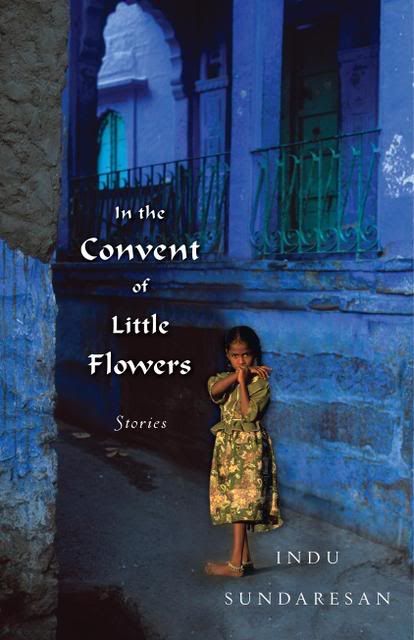
Her observations about life during the past ten years served as the inspiration for her latest book, In the Convent of Little Flowers, a collection of nine short stories delicately woven to illustrate contemporary Indians’ clash with ancient traditions.
“Indu Sundaresan turns her revealing prose on the contorted relationship of past and present in 21st-century India,” one reviewer explains. “These stories are portals into the Indian soul, revealing the breaches and the bonds that delineate the relationship between rural and urban India, and the intricate play of ancient stricture and modern striving in contemporary life…The stories within these pages are brilliant, penetrating.
Sundaresan’s first two novels, The Twentieth Wife and the sequel, The Feast of Roses, examine the life of a 17th century Indian empress. Mehrunnisa was, in many ways, the woman responsible for the building of the Taj Mahal.
“There was something I read about her that started me on this journey to research her life,” Sundaresan explains, “and try to figure out who she was.”
Her third book, The Splendor of Silence, is also set in India. The fictional love story follows the four days in May of 1942 between an American soldier and an Indian woman.
In the Convent of Little Flowers was born from Sundaresan’s observations of interesting events that caught her attention. “What guides my writings are things I overhear or read in newspaper articles. I get connected to these people’s lives because I live in the same time they do,” she says. “Unlike my novel length fictions, these stories were conjured through random insights. You can’t shut yourself out from your life to write. For me, it’s part of the process, where I look around and discover what I’ll be writing today.”

Another major departure from her earlier writings was to place the story in Seattle, which Sundaresan admits was a struggle. “One of the things I could have easily done was to write about the Indian American experience in the U.S. Although my husband and I have lived in Seattle for many years, I never wanted to write about the American experience. All my fiction was written about India. I had no idea about how to structure the environment,” she says. “I also find it difficult to write about a life I currently live. I just don’t have the distance and the perspective to look at it in an unprejudiced manner and say ‘OK, this is what happens.’”
Still, Sundaresan managed to navigate the pitfalls to turn out another powerful set of stories. Her first story, Shelter of Rain, is about a young woman who is adopted from India and comes to live in the Pacific Northwest. Twenty years later, she receives a letter from Sister Mary Theresa, a nun at the Convent of Little Flowers Orphanage in Chennai, requesting her to come back home because her mother is dying.
“As far as my work goes,” Sundaresan says, “I don’t think there’s any other country in the world that would have embraced my work as much as America. I understand the racism and understand that it exists, but I don’t think there’s any other country in the world where it exists less. It’s true. You couldn’t go to any other country in the world and find such a diverse city of people who have lived there for many years and become part of the culture, then have infused their own culture into what is mainstream America.”

Creativity in India

Sundaresan was born and raised in India’ fourth largest metropolitan area, Chennai (formerly known as Madras), which is located on the southeastern coast. However, as a result of her father’s profession as a fighter pilot in the Air Force, she grew up all over Northern India.
An artistic child, Sundaresan was inspired by her father, who enjoyed spending his time with a paintbrush and canvas or a book. He was also an exceptional storyteller.
“That’s how we spent our weekends. We read a lot, we told each other stories and he painted while we read books ourselves. So, growing up an artistic kid is only from the point of view of doing many creative things, but none that I was particularly good at,” Sundaresan laughs.”
Sundaresan arrived in the U.S. in her early twenties to attend graduate school at the University of Delaware. She earned a degree in operations research and another in economics. She believes she has been lucky to walk a fortunate path without racism. But, she points out that it is where you decide you want to live that dictates the environment suitable to your life.
“I have been very lucky to be in positive environments, in part, because of where I chose to live. The University environment is very little contusive to any sort of racism because there are so many people around who come from different countries and they’re judged on their intellectual merit, not necessarily on how they look or what they say,” Sundaresan explains.
“Looking back, I realize what was expected of me. You don’t grow up and say, I’m going to be a writer. How are you going to make money and how are you going to pay the bills?” Sundaresan says. “When I finished graduate school, I decided I want to write a novel. It’s not something I struggled with and thought ‘I’ve done all this work and I should be doing something very practical.’ I looked at my academic journey and knew I paid my dues to society and accomplished what was expected of me. [It was time to] do what I want, which was to write.”

Silence is Golden

“I like quiet, so I write at home,” Sundaresan says. “I have an office, but I’m not very good at using that space, so I sit on the couch or bed with my laptop. What I really need is quiet. I need nobody else around.”
Sundaresan says she enjoys being alone because that is when inspiration usually arrives. But, she admits that it’s not always practical to sit down with a piece of paper and jot down what she is thinking.
“I have many moments where visuals or other things come to me. In fact, I’ll sometimes find myself writing in my head as I’m walking in a mall. I don’t have the time and so I write a lot in my head,” she says. “A lot of it gets lost, but what eventually gets put down on paper is a result of what I’m thinking. I don’t fret about the things I lose because when I get down to writing in my quiet environment, it makes itself up.”
Sundaresan contends there’s a wealth of courageous Indian writers ready to break through their shells and offer their literary gifts to the world. Having a good story is one thing, but timing, persistence and patience is the key to success.
“It took me five years for The Twentieth Wife to get published,” Sundaresan encourages. “That was simply because when I was sending it out to bigger names, my manuscript wasn’t good enough. I didn’t revise it enough and sat with a bunch of rejection letters. I had to work hard for it.”
When asked how the new generation of budding authors should pursue their dreams in the writing world, Sundaresan states the prevalent theme behind her writing is,”I want to finish my novel.”
“People stop to think too often about how hard it is to write, but today, there’s more access to information than there has ever been. Even when I began writing, the Internet didn’t exist. But, I wrote a novel. You need to be patient and persistent.”


Indu Sundaresan will read from her book, In the Convent of Little Flowers, tonight at Seattle’s Elliott Bay Bookstore. Additional information on Indu Sundaresan can be found on her website.


© 1/12/2009

The Life and Art of Andrew Morrison

by Ramon Shiloh

To triumph, an artist must find a balance among life’s creative entanglements: money for art supplies, a place to create and a desire to produce. These minor obstacles can ultimately hinder an artist’s ability to fulfill his or her destiny.
Yet, at the tender age of 27, Andrew Morrison (Apache/Haida) has risen above these timeless challenges to become a highly recognizable figure in the Native American arts community. His profound murals, which have been featured at universities, powwows and festivals from Alaska to the Southwest, have also acquired an abundance of awards and commissions.

During the 13 years of his professional life, Morrison has captured the hearts of his peers and elders, who have in turn championed his work. “The reason I have lasted this long creatively is community support – the art community, and more in the Native community. The community says my murals touch their life and makes them feel at ease and calm. Some people look at my artwork and say when they wake up in the morning it makes their day a little brighter.”

Art Intimidating Life

Morrison’s mother, who is Apache from the San Carlos Reservation in Arizona, and his father, who is Haida from Hydaburg, Alaska, made sure their children were exposed to the world of Indian life. Alternating between the two families each summer, Morrison and his brother grew to have a deep appreciation for their rich heritage.
As a child, Morrison also discovered his love for painting, which allowed him to create dream worlds that concerned him. His brother-in-law played a large role in influencing him artistically. “He was like a big brother and a phenomenal fine artist,” Morrison recalls. “This man had skills. He was attempting to network and push his art in the greater area of Seattle and the Pacific Northwest.”
“I didn’t know what I was going to do after high school. For the most part, I never liked high school. I never fit in and I was a C student just getting by. I couldn’t wait to get out of there.”
His passion for drawing caught the attention of his art teacher, Carolyn Wheeler, who gave him the confidence to find a way to make a living from his creations. “[She] was always encouraging me, saying, ‘Andrew, you have a lot of talent. You should apply to art school and just do it.’ She helped me with the application process. We applied everywhere,” Morrison says.
When he was accepted into one of the best art schools in the country, the Rhode Island School of Design, his mentor wept. “She told me it was amazing and to go out there and succeed,” recalls Morris, who says the full-ride scholarship, totaling $130,000, felt like “winning the blue ribbon because I was their prized student and they believed in me.”

When Morrison left Seattle to live in a completely different environment thousands of miles away from home, he notes that he didn’t know what he was getting himself into. “I was just a kid at 18. All I knew was that I got this scholarship and I loved expressing my art, so I went out there to put my best foot forward.”
Being part of this prestigious group was the most exciting thing Morrison had ever experienced. Most of the rigorous training he went through was dedicated to figure drawing, color theory, color design, the fundamentals of sculpting, three dimensional classes and a great number of art history lessons.
Excelling academically for the first time in his life, Morrison felt as if he had a new beginning to prove his worth without intimidation. Yet, during his first year, Morrison’s life would take a major detour.
“I lived with this extremely rich kid from Manhattan in my dorm room and he was a real jerk, as real as you can get,” Morrison reminisces. “He would always make fun of my scholarship and I would tell him how proud I was to be out here. He didn’t care and would boast about how he got in because his parents had money.” For a while, I just took his remarks and ran with it. But, one day he took it too far and it ended in an old school fist fight.”
That fight landed his roommate in the hospital and Morrison in the dean’s office facing school officials, who told him, “You disgraced us. We put this faith in you and we gave you all this money for art supplies, food and housing. If you don’t have your belongings packed by 10 a.m., we will arrest you and charge you with assault. And, if you ever step foot on the premises, we will throw a case at you for assault and lock you up in a Rhode Island jail.”
With nothing but a few dollars in his pocket and his art supplies, Morrison made the 3,000-mile drive home to Seattle feeling frustrated, ashamed and worried. While he didn’t know what his future held, he did know that this experience was going to change his life forever.

Passing on Lessons Learned

When Morrison returned to Seattle, he reapplied to six different schools. Fortunately, the Museum of Fine Arts in Boston, Massachusetts, not only accepted his bid, but granted him another full tuition scholarship.
Located just 45 minutes north of the Rhode Island School of Design, Morrison found himself driving to Providence every couple of month to hang out. “I would just chill out thinking about that unpleasant time. I would think about where I would be if I didn’t get into that altercation and know that I would have graduated earlier.”

Still, Morrison has drawn great strength from his experiences, which is evident in his murals. “I have a lot of pride to hold on to because I have had a lot of things taken away from me. I appreciate this talent much more. There are artists today I bump into and I don’t see their commitment and drive in the arts like myself,” Morrison says. “We’re living in a very short timeframe and it is my will to live as a Native man and to be inspired, as well. To see Obama in this lifetime is a great inspiring moment to create and become something of your self. Sky’s the limit!”
Today, Morrison is a humble man who operates as a beacon of hope for budding artists who are in need of direction. To elevate his own career, Morrison will soon begin applying as a grad student. He hopes to attend either Otis College of Art and Design in Los Angeles or the Savannah College of Art and Design in Georgia. Morrison hopes this move will help his prospects to showcase his work around the world.
“I think of it as a springboard to other things for the rest of my life,” Morrison says. “Cities like Tokyo, London, Chicago and New York, these places are key hot spots to be seen and heard. I feel I’ve done as much as I can at home. There are more challenges ahead.”
“For me, to be a full-blooded American Indian, anywhere in America is home. Cities don’t matter,” Morrison continues. “As a Native American, I feel that’s one thing people don’t understand. Geographical or regional locations don’t mean anything to me. Wherever I rest my dome is home. I feel our ancestors have bled for centuries for this land and me being a Native American artist, my artwork is going to touch the hearts of this great nation. It’s honest art. Who’s going to challenge honest art?”
Morrison claims he has learned enough lessons to keep him out of negative situations and to make him appreciate his talent. He wants to pass this knowledge onto other young minds who want to be heard. As a result, Morrison will attain his Terminal Masters Degree so that he can teach art as a college professor.
“In my four years in school, there wasn’t a professional practice class, like how to file an invoice or how you should get a business license and how do you prepare your taxes? How do you approach gallery owners? How should you speak to curators? How do you deal with rejection and how do you deal with career blocks?”
“Children today aren’t getting these valuable tools,” he continues. “What they’re getting are instructors painting a pretty picture, telling them to go out in the real world, the working world, where you’re in a recession. I’m going to change that.”

“People have told me that I am a good example for the kids because no matter what I go through in this life, I can’t quit. I won’t give up on my community. People believe in me. Even at times when I doubted myself and I ran over some roadblocks, people would encourage me to keep my faith and push forward. There have been people who have said, ‘Keep going Andrew. You’re one of the Indians to come out of the community that we can point to and say you did it.’”


More information on Andrew Morrison’s upcoming show dates, unveilings and current news regarding his whereabouts can be found at http://www.onestaa.com/.


© 12/29/2008


Funky Marmalade on TōST

By Ramon Shiloh

UPDATE: 
***DECEMBER 28TH 2013***
MARMALADE WILL NOW BE AT HIGH DIVE IN FREMONT; ADJACENT FROM THEN "TosT/WHITE RABBIT" BEGINNING JANUARY 9TH, 2014

As Quincy Jones put it, ”If you started in New York, you were dealing with the biggest guys in the world. You’re dealing with Charlie Parker and all the big bands and everything. We got more experience working in Seattle.”
Seattle will forever be a beacon of hope for budding musicians on the hunt for a new sound, creative freedom and experience in a thriving music scene. Of course, the difficulty in solidifying your musicianship in any community is finding that perfect venue to be seen and heard.
As one local street-performing guitar legend explained outside Pike Place Market, “I’m looking for lost souls like myself who need each other to befriend, become, inspire and perform so our message is heard. It’s a bummer man, to be out here and play for nothing. But, there’s no venue that would elevate me to rock these people out of the water. If Seattle’s music dies, then what do we have? Thousands of people like me on the street, struggling to be heard, are what you’ll find. But in my case, I gave up a long time ago.”

This long-timer’s testimonial echoes a terrifying wake up call for musicians and fans on the prowl for harmonious recognition. Before his fingers begin to lovingly strum the strings, he looks at me with solemn eyes and says, “If you do find your voice, make sure you have people in your corner. It’s the only way your music will survive. To be around people who love your musical style is the number one gem to hold on to.”

For one local band, that gem resides in the fans known as Marmaladians, who converge on Thursday nights at 36th Ave. and Evanston St. in Seattle’s funky Fremont neighborhood. TōST, a self-described “industrial chic” martini bar and restaurant, provides an intimate, sophisticated environment that perfectly complements Marmalade’s improvisational approach to Soul, R&B and Funk.
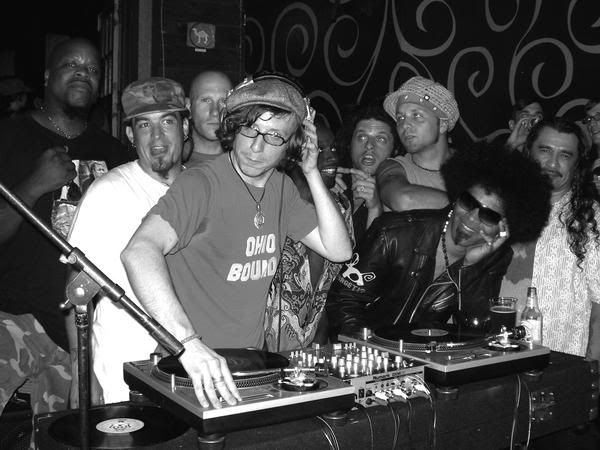
The patrons, hypnotized by the homey vibe, sink into their cushioned seats and warm themselves by the nearby fireplace. The art lining the tranquil walls is astounding. On stage, the band members from Marmalade are unpacking their instruments. Out comes a bass guitar, a keyboard, an amplifier, a talk box. Is that a spin table? More band members show up and begin tuning a trumpet, a sax, a flugelhorn. It looks like DJ Million (Davee C), the “rock” of Marmalade, has opted to play his experimental drum beats facing the crowd this evening.

As customers begin to fill every cavity of this majestic lounge, DJ Leopold Bloom spins his LPs. Considered the “human incense”, he’s the one responsible for setting the mood for the evening. As the tempo from his turntables fades, a spontaneous composition erupts from drummer DJ Million. Suddenly, Little Black Devil’s, aka LBD, (Bob Lovelace) bass riffs vibrate across the room, sending an energizing buzz down my spine.
As if tuned in to some internal rhythm no one in the crowd can heart, all 10 members on the 10-foot by 15-foot stage chime in, personalizing the groove with their own signature stamps as masters of musical improvisation.

A Rocky Road to Success
Marmalade currently holds the honor as one of the longest-running bands in Fremont. During a break, vocalist and keyboardist Chad Redlight, one of the original members of the band, divulges a bit of historical information about the ever-evolving group known as Marmalade.

In 2001, Redlight, who was playing with nuSoltribe, and Laura Piece Kelly, who was jamming with Jambalaya, decided they wanted a night for “our music.” “It was Piece’s conceptualization and continuation of Jambalaya that formed Marmalade at TōST,” Redlight recalls. “We brought in StingShark on guitar, Bob Lovelace on bass, Faith on drums, Dominic on sax, and with Victor Trey Funklove on vocals, we began to develop.”
“It took a while to build up our fan base,” Redlight admits. “In the beginning, it was rocky. Our blessings go to TōST because they gave us a long time to develop. There were many night’s where the only people in the crowds were our girlfriends and close friends.”
“[But,] this is a place for people to consistently visit and let themselves free,” the hook maker and Neo-Soul crooner says about TōST. “It’s like cement that never dries and just keeps on building. There are people that come and sit in with the band that I respect and admire so much. They add layers to our group.”

Marmalade is a band with many traditional and contemporary influences. Their genre, which the band labels Groove, is as eclectic as their personalities. Kimo Muraki, who plays the sax, vos, talk box and guitar, has a laidback, sobering spirit that glitters with every note he blows. Silent Buddhaful Mike’s notes make you feel as if you are traveling through space, yet they still manage to be intimate in some way. Big Talk (Jon Ryser), who always appears on stage either barefoot or in socks, projects an island of calm in the chaotic energy of the band.
Lovelace’s bass technique and lyrical rhymes would make Grammy award-winning artist MeShell Ndgeocello blush, while Ernest Pumphrey Jr. has an uncanny instinct to flow in between notes before the drumsticks plant themselves. A Formula One race car driver when he plays guitar, StingShark offers up a mix of Reggae, Funk, Soul and Rock, which is why his followers see him as the “hybrid.” Changing every note he picks up on, Chris Littlefield on the trumpet brings an abundance of deep musical theory in his groove licks. Lastly, Diano Garcia has earned his rightful place in bringing out world beats through his congas and bongos.

Like the original founding members, each musician plays in other bands. The attraction to play in Marmalade comes from the freedom to invent new music that the band describes will “move your body and soul.” “Positive, energetic and free, the group encourages one to be oneself,” Marmalade says on its MySpace site. “That the only way to be cool is to be you. [We] are more than a band.”

What Marmalade brings to Seattle is an undying measure of great music and fascination to those who want to be entertained and inspired. Marmalade’s message is simple: Forget about your responsibilities and come together as equals. It’s a gift to be alive around diverse cultures in these difficult times.

Marmalade: A Final Thought

Marmalade undoubtedly sets itself apart musically from all of the other bands in Seattle’s flourishing Groove scene. However, their spirit of honor to the community and their support of those in need, are always present on stage.
JUA LEKUNDU Foundation (Red Suân in Swahili), an organization founded by Chad Redlight and his wife Seka Glory Mkini, shares awareness toward their initial efforts to build a center consisting of an HIV orphanage, school/community center and to bring solar energy to the East African region.

The true magic of Marmalade is in the organic nature in which it evolves and reveals itself every Thursday night in Fremont. Like Marmalade, there is no doubt that Seattle’s music scene will continue to flourish and produce extraordinary musicians.
To the guitar player at Pike Place Market, you, too, have been heard. Keep jammin’ man.

Follow Marmalade on their Facebook Page for Updates and Music Info at: Marmalade Info

Also Questions regarding the JUA LEKUNDU Foundation can be directed to jualekundu@gmail.com.


© 12/15/2008