Sunday, October 11, 2009


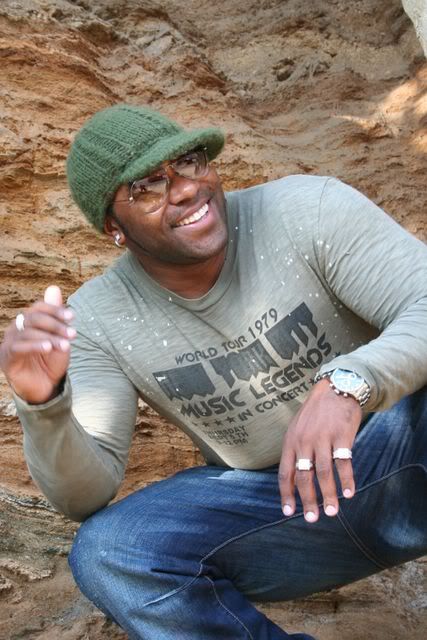
Yo, Poppa Yo! Neo Soul Artist Dwele Discusses Loss and Life

by Ramon Shiloh

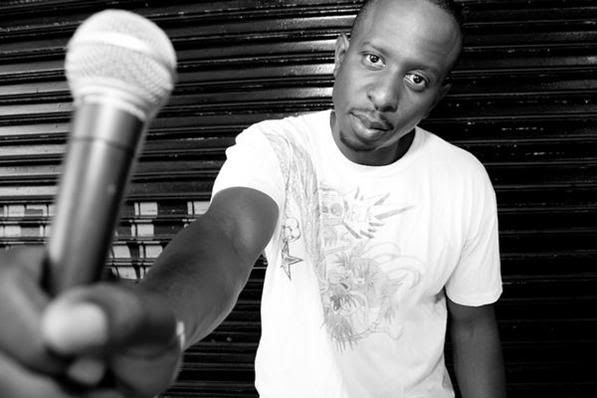
Dwele, a Neo Soul singer, songwriter and record producer, creates music that resonates with an introspective association of interlacing strands from everyday life. His passion for songwriting and his entrepreneurial spirit were born from the loss of his father at the tender age of ten and an old ambassador of the streets, both of whom made their own unique contributions to helping Dwele find his voice.
“If someone is going through something and you talk about it in the song, along with the vibe, I feel I’m giving the listener relative feedback from the heart. Especially with relevant issues taking place today,” Dwele explains.
When Dwele dropped by Seattle’s The Triple Door in mid-August, ColorsNW had the chance to chat with the three-time Grammy-award nominee about his music, life, loss and love.

Growing in Tune

Born Andwele Gardner, Dwele was raised on the west side of Detroit, Michigan, in a musical family. At the age of six he began playing the piano, only to later take up the trumpet, bass and guitar. Even though he considers himself an emcee first, being able to manage his image as a prolific musician is what Dwele loves.
His father, Robert, a doctor by trade, but also a drummer and church organist, passed down his passion for music to both him and his younger brother, Antwan, who Dwele describes as “a hell of a trombone player.” Dwele also credits his mother as a “big inspiration who supported me through everything. She did everything in her power to usher my life in a positive way through music, then and now.”
Through the years, Dwele’s musical style has been forged in the path of provocative African American entertainers who came with straightforward sounds of verse, chorus, bridge and hooks to develop the origins of Neo Soul in the late 1960s and early ‘70s. Like his contemporaries D’Angelo, Erykah, Angie Stone, Musiq Soulchild and A Tribe Called Quest – whom he cites as his greatest inspiration – Dwele’s lyrics are substantive, weaving relevant stories of remembrance, romance, infidelity and love into each of his songs.
Still, the smooth-jazz crooner is in a league of his own, delivering subconscious emotion to accompany the syncopated percussion breaks and swooning isolated notes, fusing nostalgic episodes of vintage flair through classic soul, jazz, funk and hip hop.
“I look at my music as if it’s a little bit under the radar, which is special, because I know the people who are checking me right now are people checking the music, or what the music is,” says Dwele, noting the importance of a fan base that is always offering constructive feedback. “It’s not because I’m the hottest thing right now. It also means the people listening and supporting my music will be around for a while, taking that journey with me.”
Dwele is no stranger to hard work in order to achieve success. The first 100 copies of his demo “Rize”, which was recorded in his bedroom, sold within a week’s time among Detroit’s underground hip hop patrons. Then, while playing a gig at Café Mahogany, he caught the attention of Slum Village, who recruited him to sing the hook for their hit single “Tainted”. This paved the way for his debut album, “Subject”, which was released in 2003 under Virgin Records.
Two more albums would follow – “Some Kinda” in 2005, which features nine tracks written and produced by Dwele, and “Sketches of a Man” in 2008, which was released under his current label, RT Music Group/Koch Records. Self described as an amateur painter, several of Dwele’s acrylic sketches are even showcased in the CD packaging of the 2008 release.
Along his journey, he has collaborated with such notable artists as J Dilla, Common, Bahamadia, Foxy Brown and Kanye West and even nabbed a Grammy nod in 2008 for his cover of Earth, Wind & Fire’s “That’s the Way of the World.”

Discovering Your “Some Kinda”

Dwele’s success hasn’t come without major bumps in his life. Perhaps the biggest influence on his musical genius was the loss of his father, who was murdered at the age of 37 just outside his family home while a young Dwele watched through the window. Dwele explains his motivation to put the hours he does into his music might not have happened had it not been for this loss.
“My father was one of my inspirations for allowing my musical journey to take shape. If it wasn’t for him purchasing a keyboard for me before he passed, I don’t think I would have got into music. I look at that experience as a way of keeping a part of him with me by continuing and learning through different encounters of my life musically, perfecting my craft and eventually putting my emotions into music. So, even through tragedy, I think something good came out of it.”
Dwele observes that in this short time on earth, if you were meant to accomplish things that will give you a positive platform in life, you must take advantage of it. This philosophy contributed to the evolution of “Some Kinda”, Dwele notes on his website. “At the end of the day, it all comes down to what you’re leaving behind on this earth, what kind of love you’ve left for the people in your life. After my father’s passing, I realized that by introducing my brother and me to music, he was sharing his ‘Some Kinda’ love. It’s about discovering what your ‘Some Kinda’ is.”
He explains this is especially important because “you just never know how things will turn out.” For example, at the height of Slum Village’s career in the mid-1990s, J Dilla emerged as one of Detroit’s hottest music producers, collaborating with Common, Busta Rhymes, The Pharcyde, Janet Jackson and many more top artists of the era. Sadly, J Dilla’s life was cut short on February 10, 2006, after being diagnosed with Lupus and Thrombotic thrombocytopenic purpura (TTP), a rare blood disorder. Three years later, fellow group member Baatin passed away at the age of 35 from unknown causes, deeply affecting the Detroit hip hop scene.
Another big influence on Dwele’s life was an elder on the block where his family lived, who went by the name Poppa Yo. A profound philosopher and ambassador of the streets, distinguished for his streetwise wisdom and sound judgment, Poppa Yo, who witnessed the murder, provided Dwele with a link to his father’s past.
“He always had crazy stories and knowledge for us. I came to find out that he was my father’s friend and it was always good to hang with Poppa Yo and my little brother because he had stories about our dad,” Dwele recalls.
Dwele opens his debut album “Subject” with a cameo by Poppa Yo, who offers up a few words of his wisdom on the fundamental rule of how to live smart. Dwele approaches him saying, “Yo, Poppa Yo, I know you got that knowledge for me.”

“Well, I’ve lived over 70 years and I didn’t get that way by being a fool,” Poppa Yo responds. “I don’t think. I mean, I’ll tell you the truth, I don’t want to lie to you young cat ‘cuz there is no point in lyin’. I figure if I could tell somebody and help them, I’d tell them. If you wanna listen, you listen. If you don’t, go ahead on and take your knowledge and go on ahead.”

Dwele says he embraces the understanding that truth and knowledge go hand in hand. After Poppa Yo’s death in 2005, Dwele paid tribute to him in a very sincere way on “Some Kinda”.
“Starting a song out for him on the first track of ‘Some Kinda’ was like coming full circle,” explains Dwele’s executive producer, Ron Estill, who has been with Dwele on every step of his journey. “He was a great, great old gentleman storyteller. He was a man who would be sitting in his truck in the driveway and people would go by and say ‘what’s up.’ So, Poppa Yo played a very intricate part in Dwele’s upbringing. What makes the song about Poppa Yo and his voiceover cameos so special is that the song is more of a remembrance of his father. The song really speaks on Dwele being raised protected where he can look up and say ‘Hey, Dad, you’d be proud of me.’”
With musicians who are struggling in a competitive market, branding and seeking a lasting image of their craft, Dwele has continually noted that being true to your art form and staying consistent to your sound has it rewards.

“Get out there and take advantage of the free promotion of the internet. It’s a new day, it’s a new edge as far as how we, as musicians, cultivate our sound and perfect our own outcome. My hope is that my music in general, beyond the actual lyrics, eventually brings people together.”


© 10/7/2009

The Flavor of Hip Hop is Going Green

by Ramon Shiloh

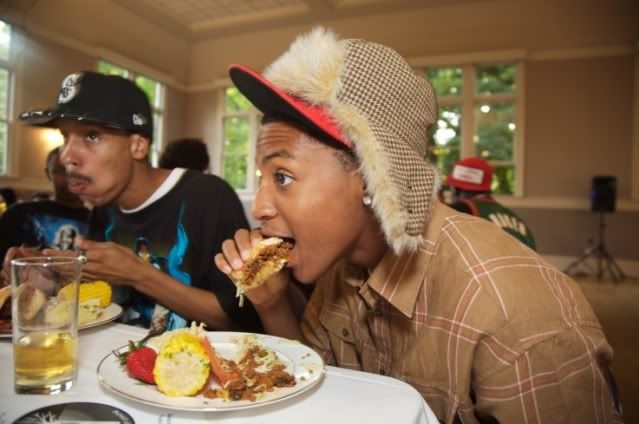
In late June, a group of concerned vegeterains gathered in Seattle to forge a community dialog about eating smart and healthy to deter children’s hostile dietary regiment in everyday life.
Seattle talk radio personality Keith Tucker and vegetarian hip hop artist Shyan Selah teamed up with Vegetarians of Washington and the King County Department of Public Health Environmental Health Services Division to celebrate the creation of an innovative film documentary, Pursuit of A Green Planet, which addresses public health issues through people’s eating rituals.
Tucker says his primary goal in hosting the Seattle Area Youth Green Dinner was to shift the community’s eating habits to a vegetarian lifestyle. “As we continue to develop and promote our film project, we felt one of the most important things we could do was make our concept as real as possible to our supporters. If we can introduce people to vegetarian foods, it will be a major step in the right direction. We believe the Green Dinners can help change people’s lives, even before the film hits the big screen.”
Tucker is working with photojournalist and filmmaker Inye Wokoma and Evergreen State College professor Dr. Gilda Sheppard to use the power of media and grassroots activism to and promote the film project, while serving the community at the same time.
Pursuit of a Green Planet (POAGP) is the first documentary film project about hip hop, health and the green movement. The film takes a critical look at the connections between food, culture, economics and the epidemic of lifestyle-related disease plaguing America’s youth. Tucker is a regular guy who will become a living experiment as he makes the radical transition from your average American diet and lifestyle to a truly green, organic vegan lifestyle. He will be our guide on a journey of discovery as we learn how our food today actually makes us sick, the role corporations play in determining what we consume, the history of chemicals in our food chain, how our everyday eating habits can become deadly and what we can do to combat these realities.
Tucker and company will travel the country on the Greenhound, a bus converted to run off pure and recycled vegetable oil. On the journey will be two youth who have severe and immediate health issues related to their diet and lifestyle. These youth are at a crucial crossroads where they must change their lifestyle or risk a dramatic decrease in their health and quality of life. Along the way, the travelers will meet some of the biggest personalities in hip hop, all of whom are long-time vegetarians and vegans, including Saul Williams, Justin Bua, Persia White, Stic Man and KRS One.

Shyan Selah, hip hop artist, outreach activist and founder of Brave New World, Inc., who is not only a friend of Tucker’s, but he will also be producing the original soundtrack for the film. Selah says the project found him with open arms.
“I’m honored to be part of this project. You start seeing many forces coming together as a one mind structure in contributing to the importance of health. Because of sickness and the outrageous numbers of diabetes and other diseases, when Keith approached me about the vegan and vegetarian movement, it struck me as something of interest” explains Selah, who notes that he has always followed a progressive path of eating healthy.
Selah contends that as consumers, we fall short on our eating habits when we struggle with the demands of our relationships at work, at home and family settings. But, even with a full traveling itinerary and life on the go, his purpose is clear: you need to make time to eat healthy in order to be healthy.
Scientific studies have linked attention deficit disorder, depression, Alzheimer’s, obesity in all ages, schizophrenia and violent behavior to the food we consume, particularly junk food that is absent of vitamins and the minerals found in manufactured diets.
Being tapped to lend his support to this project, Selah says, makes him feels energized because of the communities the project will target first. “The initial process to begin Green Dinners is to give inner-city kids and parents their first vegetarian meals. The event here in Seattle was a great introduction of how this documentary and the movement of eating healthy will inspire many others to change their internal carbon footprint. All of a sudden you see these kids getting overwhelmed with information and getting the right message.”
The event in Seattle hit a profound high note with speakers who are concerned about the foods we digest. Among the attendees was Keynote Speaker Dr. Che Joplin, who serves as the Chief Executive Director of Health of King County. The chiropractic doctor and co-author of I Am Hip Hop, I Am Health spoke on the importance of connecting health issues with hip hop as a cultural force for positive change.
Another speaker, Ngozi Oleru, who is the Division Director for DPH – Environmental Health Services Division (EHD) in King County, provided startling statistics about how the region or community you live in – wherever it is in the world – dictates the diseases you might inherit.
“Ngozi startled everyone with her perspectives,” Selah says. “She stood up there and said, ‘You can tell me what neighborhood you’re from and I can tell you what diseases you’re going to get and approximately when you’re going to die.’ Her statistics were that valid, where she can pull from that analysis and give you that information. This was incredible for me to hear. So, right after she finished, I got up on the mic and told these kids, that’s an amazing thing, that someone can have the nerve to get up here and tell you this information.”
Even the food, which was provided by the Seattle-based catering company, the Upper Crust, was a hit. “There were huge applauses all around that evening,” Selah says. “People who are solely meat eaters were very surprised by the variations of vegetarian dishes that were a wonderful to experience.”

Selah poses a question about the needs of a child and the expectation behind their eating habits by turning the table on his own observation as a child. “What would I have wanted when I was 12? I wish somebody would have come to me and said, ‘There’s a better way. Here’s how to take better care of your body and this is how you train your mind.’ Children today still don’t have that. So, today, I look at what I do as if it’s rehab for me. This is the first time I’m taking on music and health as a balance for our generations to come.”
The concept of going green is, in and of itself, an examination of not only consuming food, but also understanding the entire quality of life. The secrets being revealed behind the Green Dinners is if there is a roadmap on how peace can be obtained, where do you begin? The event sparked a lot of conversations. Most attendees voiced it begins at home, how we communicate with each other and how we educate ourselves to make proper and constructive healthy decisions everyday.
“I think a project like this really isn’t about choice, but rather our need to stomp out our addictions to many things. If I’ve been buying Skittles and soda for the past 10 years, I’m probably not going to purchase green tea. I don’t know of any kids today who would walk in to a 7-11 to grab a protein bar and green tea. It’s good that the choices are there, but you don’t see the marketing for that.”

Learn more about Keith Tucker and his new documentary, Pursuit of a Green Planet at http://greendinner.ning.com/ or www.myspace.com/thecultivationofhiphop. Shyan Selah can be reached at www.myspace.com/shyanselah.


© 8/5/2009

My Teachings Through Corn Husk Dolls
by Ramon Shiloh

As an instructor of the arts, to be an Artist-in-Residence at Islandwood School on Bainbridge Island WA, was an incredible opportunity to expose children and adults to environmental concerns through the origins of storytelling.
The Artist-in-Residence program provides a gathering place for local, national and international artists who represent various disciplines, media, cultures, experiences and ages to work with visiting participants. The overnight school and community programs aim to expand the understanding and relationships with natural systems and cultural communities through experiential and inquiry-based exploration in the outdoors.
In order to expand the students’ knowledge and relationship with themselves, their peers and the world around them, I wanted to help them identify the process, structure and technique of storytelling. To achieve this goal, I provided models through the art form of storytelling to provide a connection on many levels: what is a storyteller, why storytelling is important and how to tell a story.
For over two decades, I have had the ability to explore creative outlets in diverse communities. With every place I have visited, children were my primary focus in offering insights that engages the importance of learning and playing with a sense of pride and accomplishment through the art of storytelling.
In February, I had the honor to teach a three-day workshop about the history and making of Corn Husk Dolls. This instruction tackled the beauty and history of corn husks in a variety of ways. Not only is corn a symbol of agricultural, alternative fuel and culinary importance, but the fiber remains of the vegetable itself, which can be handcrafted into dolls, also provides comfort for children all around the world.

While Native Americans have all produced dolls of varying styles, the corn-husk dolls are one of the oldest forms known in the Americas, primarily for cultures that harvest the versatile vegetable. Ornate costumes also provide an identity of the people’s history. Corn husk dolls are delicate in nature and are meant to describe the beauty of a child.
Traditionally, Native Americans did not identify facial expression on the head. The Iroquois from the Great Lakes Region has a legend about a “faceless doll.” The first corn-husk doll was made to be the companion for a little Native girl. The doll was so beautiful it spent all of its days gazing at itself in the clear pond in the woods. The Creator punished the doll for her vanity and removed her face forever. The lesson behind the story is to remind children that it is wrong to think they are better than anyone else.
My lesson was simple: to create a doll that represented each child’s power of imagination and to guide them through character development by decorating their dolls. Each child was able to find a story in their doll by creating a story that describes the child’s place in the world today. Though the process was simple, the results were staggering! These children were instantly engaged in this activity. Their references to the world about environmental concerns, friendship and community brought much joy to my life and their own.

My hope, efforts and accomplishments reflect a tradition that contributes to this nation. Who else but youth can carry on the teachings of oral traditions? During this time when storytelling is a lost art, we must do what we can to embrace children’s voices as a focus of their existence. When youth are not honored or praised, they walk away from who they are. My hope is to show children that there is a place for each of us to play and learn.


© 3/26/2009

Owen Smith Reveals the Comedic Condition

by Ramon Shiloh

For most comedians, the ability to perform in large venues and to have access to any club they wish only comes with being a celebrity. As Owen Smith has found out, it’s hard to break through in the competitive comedic industry. Smith points out comedians such as Larry the Cable Guy spent the entire 1990s working all the markets in order to build the following they have today.
Smith acknowledges that if he wants to achieve the same level of success, it’s about patience and knowing what you’re searching for. “I’ve been told to pursue the industry credits in order to further my career,” Smith explains. “One of the main reasons for my move to Los Angeles was to be a national headliner in the hottest markets.”
And, the move has certainly paid off. In recent years, Smith has landed endorsement deals for General Mills, McDonald’s, Coca-Cola, Blockbuster and the Illinois Lottery. He has made guest appearances on “Crossing Jordan”, “Monk” and “Gilmore Girls”. He has delivered some of his funniest jokes on “Latino Laugh Festival: The Show”, “HBO Comedy Minutes”, “The Orlando Jones Show”, “National Lampoon’s Funny Money” and BET’s “Comic View”.

Smith has even tried his hand at scriptwriting and voiceovers, playing several characters in the highly-anticipated Orlando Jones animated sketch comedy “BUFU” on BET. In November 2007, he taped his first comedy special, “Anonymous?”, which is slated for release on April 10, and since 2005, he has appeared in multiple roles on Chris Rock’s hit sitcom “Everybody Hates Chris”, including Afro-Centric Man, Moving Man and Radio Announcer.
“Working on [Chris Rock's] show these past few years, I’ve learned many things,” Smith says in a shout-out to the comic on his website. “But, the one lesson I’ll treasure most is: Through hard work, ANYTHING is possible. Chris went from washing dishes at Red Lobster to being called ‘The Funniest Man in America.’ Enough said.” Video: Trailer for Owen Smith's first DVD release Anonymous


Finding a Voice

According to Smith, there has been a shift in the industry that expects comedians to fill seats rather than nurturing up and coming talent. Smith says that while his Hollywood adventures have been fun, he believes it is time to “stop chasing and concentrate on what I want to do and say, in order to find my own audience. My goal is to be able to work all the Top 20 markets.”
That’s one reason he decided to join the Brain Noise Tour with Orny Adams. On March 13 and14, the two comics found themselves in Bellevue, Washington, captivating a young audience at Parlor Live. Smith says Seattle is a great place to tap into a new fan base because it brings an opportunity to develop naturally and to be heard in a diverse, unfamiliar environment.
“There’s a bunch of comedians who love Seattle and I’m a fan of David Cross and he loves Seattle. The beauty behind Seattle is how intelligent people are and I feel it’s one of the last places where a nerd can get laid for being a nerd,” Smith jokes. “What I enjoyed about Seattle was the possibility to give it my all. I find my act in the last two years has gotten a bit more personal, which has helped me accumulate real fans.”
Critics have noted that watching Smith on stage is like watching a conductor command an orchestra. Smith captivates his audiences with unapologetic humor, drawing cleverly upon many of the issues we face today, crossing lines most other comedians don’t dare. Smith recognizes that observations of the comedic art form are educative on two diametrically opposed philosophies – a classy style of humor delivered from a place of love and honor versus the “mean for no reason” school of comedy.
“I pride myself on putting thought behind my observations. I want to provoke my audiences with intelligence, yet hit them hard enough with humor to get them laughing at serious issues,” Smith explains. “I was taught to know more than, or as much as, your audience about the topics you talk about. Whoever is in front of me, I want to relate to them. Richard Pryor did it from a personal space, Bill Cosby did it from a storytelling mindset, George Carlin did it from a language perspective. Back in the day, jokes weren’t segregated like today. Back then, clever social issues were the heart and norm in society.”
Smith says he also draws inspiration from his family. “Hands down, my Aunt Kita is the funniest person I know,” he writes on his website. “She is the first person I ever saw ‘work a room.’ At every family get-together, she’ll have you cracking up.”
But, it was his encounter with an African American funny man that rocked his world enough to open his eyes to see his future path. “When I was nine years old, I saw Eddie Murphy’s Delirious on HBO. I remember yelling at the TV, ‘That’s what I do and that’s what I want to do for the rest of my life!’ While I was watching, I was also thinking clearly, ‘Just not in that outfit!’ and hoped that wasn’t the comedy uniform.”

The Shaping of a Comedian

Born in 1973 in the Bahamas, Smith actually spent his entire childhood in the U.S., moving first to Washington, D.C., then permanently settling in Maryland. Although his family was supportive and loving, Smith says he never felt like he was being heard or taken seriously by his family, friends or even the community that he grew up in.
“I was funny because I never felt like I belonged. For instance, I would be watching a mystery movie with my family and I would say to everyone, ‘The lady in the red hat did it!’ and no one would comment. Twenty minutes later, one of my uncles would come through the room and go, ‘The lady in the red hat did it!’ and everyone would yell ‘Yeah, yeah I was thinking that!’”
Neighborhood kids would tease him, too, for being an islander from the Bahamas. Having a lisp didn’t help. “Even though I’m Black and grew up in a Black neighborhood, I couldn’t identify with the African American experience. Whenever I would play outside, other kids and I might be getting along, but one would approach me and say, ‘You’re not from here. Where you from?’ At a young age, I was forced to defend my heritage because people would clown me. To take pressure off from them teasing me, I would tease myself. I also became really great at teasing others to be funny. That was my power source.”
Being funny allowed Smith to find a way to fit in with his peers at Central High School in Capitol Heights, Maryland, where he won state championships in basketball and track and was even voted Most Likely to Succeed. Still, few knew of his dreams to become a comedian.
“I didn’t tell anybody because I was afraid people were going to tell me I couldn’t be one. I saw a lot of my friends get their dreams crushed because cruel people would say ‘you can’t sing!’ and they would eventually stop. Many examples like that kept me at bay from sharing my dream with others,” explains Smith, who was 19 before he first told anyone.
At a summer job after graduation, he realized how natural his talent seemed to be. “I had everyone cracking up at every lunch break. But, it wasn’t a desperate type of crack-up with simple jokes; it was a natural humor that made these guys fall to pieces.”

That year, Smith made his debut at the Comedy Connection in Greenbelt, Maryland, thanks to the encouragement of his friend, Kevin. Smith says his first open mic – which involved delivering a joke about the Power Rangers – was a surreal moment. “I got some laughs, even though I didn’t know what I was doing! Although it was a scary process, I knew that was what I wanted to do.”
Still, he continued to pursue a degree in financing at Notre Dame while honing his technique. Smith says this period in his life was the first time other Black men had treated him with encouragement and respect, outside of playing ball. With the help of other local comics, during his early 20s, Smith went on to win several comedy competitions, building a name for himself.
“I ended up working the door at the Funny Bone in South Indiana, then became the house MC. That’s how I met every headlining comedian in Chicago,” Smith explains. “I was honored to work with them all. Some of them that took to me kept telling me I should come to Chicago.”
So, in 1996, he took their advice and quit his day job at Prudential Preferred Financial Services to pursue comedy full-time. Smith says his journey in Chicago brought him an understanding of how to survive as a comic, preparing him for the many adventures he encountered when he finally made it to Hollywood. It also finally brought about acceptance within his family over his chosen career.
“My mom was not too enthused with the idea of me doing standup comedy full-time,” Smith recalls on his website. “Then, she saw my performance at Milt Trennier’s in Chicago with Bernie Mac. Afterward, Bernie talked to my mom for a full 45 minutes. To this day, I don’t know what he said, but after that, my mom was my biggest fan.”
“I remember a quote that Bill Maher said about the relationship between comedians. He said, ‘They love each other because they share the dream, but they hate each other because there isn’t enough of it to go around.’ This is a competitive market. I’ve been fortunate to find my place with those who enjoy it.”


Visit Owen Smith’s website to learn more about the comic and his scheduled tour dates.


© 3/23/2009

The Hidden Movement of Carmona Flamenco

by Ramon Shiloh

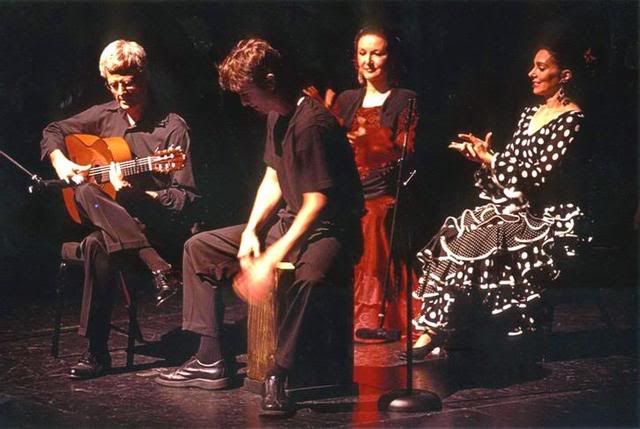
Nestled in the hilly district of West Seattle, Flamenco Arts Northwest (FANW) is an organization dedicated to elevating students' appreciation of and discipline in the art of Flamenco. Founded in 1996 by Executive Director Marcos Carmona and his wife, Rubina, FANW has garnered a large following of fans, dedicated artists, musicians, and singers drawn to the rhythms of this emotional craft.

Rubina explains that Flamenco is one of the most complex genres in performance art, involving voice, guitar, percussion instruments, and dance. "It’s a very difficult technique. It’s very demanding. Any student who has experimented in any of the disciplines – dancing, singing, or guitar playing – is going to tell you that Flamenco is the hardest thing they’ve ever studied."

Although Flamenco is considered a Spanish art form, its defining elements are poverty, emotional hardship, and displacement. Born among dissident Christians, Jews, Arabs, and Gitanos in Andalusia, Spain, Flamenco's somber, controlled expressions are the product of many cultural influences.

The Carmonas, who are both of Jewish descent, emphasize their heritage's significant influence on Flamenco. "Among North American Flamenco artists, next to people of Hispanic descent, Jews are the biggest ethnic group. The singing is one-quarter Jewish," Rubina explains. "The music is a blend of Jewish, Muslim, Gypsy, European Spaniard, North African, and Middle Eastern influences. In the dance, there is a strong influence from India. Certain foot techniques are identical to kathak, a North Indian classical dance. This comes from the Gypsies who migrated to Spain from India in the 1450s, mingling their styles and rhythms with European and Arabic dances."

Flamenco in the Northwest

Rubina and Marcos have been performing throughout the U.S. and Spain for 30 years. Together, they form one of the most enduring and successful Flamenco ensembles, Carmona Flamenco, outside of Spain. The Pacific Northwest has been their home base since 1988, when they began performing regularly with dancer Ana Montes in concert and cabaret venues. Carmona Flamenco has also performed at the Allegro Dance Festival, appeared at the Kirkland Performance Center, and helped launch the Arts West and Music Northwest organizations.

“We did a lot to get Flamenco out there to raise awareness. In time, it grew enormously,” Marcos says. “We have also taught many students who formed what we now call guerrilla groups. They do their own thing and we are proud of that.”

In 1999, Carmona Flamenco released its only CD, “Reflejos,” which reflects the Carmonas’ respect and commitment to the art form. “We’re performing artists, not recording artists. That’s why we only have the one CD. We are constantly working to develop new material. We improvise, so we can instill variations into the same thing.”

Another group performing under the FANW banner is La Peña Flamenca de Seattle, formed in 1995 to showcase the talents of aficionados and emerging professionals who perform with Carmona Flamenco. La Peña currently includes 22 dancers, guitarists, vocalists, and other musicians of various ages and multicultural backgrounds. La Peña provides an engaging learning and performing environment, as well as a great social opportunity for adults and mature teenagers.

Over the past several years, the annual La Peña concert has moved from a small 90-seat hall to a beautiful 200-seat facility. Seattle area performances have also included the Broadway Performance Hall, On the Boards, Asian Art Museum, Folklife Fiestas Patrias, Nippon Kan Theater, Century Ballroom, Dance on Capitol Hill Theater, Hokum Hall, and the University of Washington Ethnic Cultural Theatre.

It's a Family Affair

Conveying a specific mood is at the heart of Flamenco. Rubina’s melodic cante (singing) is accentuated by a haunting depth likened to an emotional aria. Her rhythmic palmas (hand claps) keep time with the stomping of her feet in the baile (dance), preserving this beautiful art form in its purest form.

Rubina began her artistic journey in the Bay Area of California, where she grew up. “I’ve always been attracted to dance and music, so I’ve always pursued some type of musical education,” she reminisces. “I studied woodwind instruments in junior high and high school and sang in choruses. I didn’t have much opportunity to pursue dance until high school when I joined the modern dance department. Fortunately, I was able to have these resources in public schools.”

Rubina spent her college years studying Anglo American folk music, as well as Balkan and Greek folk dancing. She even spent a year and a half playing with Jerry Garcia. “When I was doing folk music in San Francisco, I met Jerry Garcia, Bob Hunter, and those folks before they were the Grateful Dead. We were doing Bluegrass together. I sang with them and started playing dulcimer and a little banjo. We played until they went their way and I went mine.” Rubina says as soon as she discovered Flamenco, she left everything else behind.

In March 2007, at the Ethnic Heritage Council’s 26th annual dinner and awards ceremony in Seattle, Rubina was presented with the Gordon Ekvall Tracie Memorial Award for her significant contributions to the preservation and presentation of ethnic arts in the Pacific Northwest. This honor is a well-deserved tribute to a woman who has spent her life passing on her knowledge and expertise to a new generation of Flamenco artists.

When you hear Marcos play the guitar, you find yourself lost in the breathtaking range and energy of his music. His traditional and contemporary performances include basic Flamenco guitar techniques, such as arpeggios (broken chords), alzapua (thumb technique), rasqueados (strumming), and picado. Each technique is designed to elicit emotion, emphasizing the dignity and elegance typical of traditional Flamenco.

Marcos’ artistic journey began in San Francisco, where he first learned to play the trumpet and violin. During high school, his love for the guitar was permanently sealed. Marcos joined the folk music movement in the 1960s but never strayed too far from the popular music of the time. When he discovered Flamenco, he knew he had found a genre that offered him unlimited challenges.

“It was the cante that grabbed my attention,” Marcos recalls. “That, to me, is the part I love the most. The guitar and the dance come next in terms of importance, not in terms of commercial success, but in terms of hierarchy. But, on the stage, it’s usually the opposite. The dance is looked at first.”

The Carmonas’ youngest child, 26-year-old David Carmona, has also become a permanent fixture of Carmona Flamenco over the past six years. His percussion style is extraordinarily hypnotic, accompanying his mother and father as they weave through the passages of song and dance.

David’s percussion instrument is the cajón (crate), a box played by slapping the front face with the hands. Traditionally, the cajón did not have an integral role in Flamenco, but it became widely accepted in the late 1970s. Associated with the Afro-Cuban Rumba, the hardest part of learning to play the cajón is mastering the complicated rhythmic patterns.

“David just fell into it. He has been a musician forever. We proudly raised him as one,” says Marcos about his son, who also loves Jazz, Reggae, and Hip-Hop. “With all these fusions, as a percussionist, he loves bringing his drum kit everywhere, which will give him the ability to do many great things down the road.”

One reason this enduring family has been so successful is their solidarity. “If I was teaching by myself, it would be a lot harder,” Marcos says. “If Rubina was dancing by herself, it would be a lot harder.


Seattle Author Interviews Historic Dead People

by Ramon Shiloh

Michael Stusser is an author, even if his style is a bit unconventional. Where he excels is in the unique detailing that is so capable of calling out the absurdities of the human condition by poking fun at our inner-most secrets. Stusser’s been noted as a man who “brings an out-of-the-box approach to communications, activism, message and his ideas to promote world vision, achievement and fluxus collaboration.”
“Real early in my childhood, I was into visuals with stories that turned me on to writing. When I was in sixth grade, I was part of the elementary school newspaper and I felt really proud to have my name on a story I wrote. That prompted high school yearbook stuff to high school newspapers,” Stusser says. “My writing style has always been told by a first person perspective. Early on, I would always journal my thoughts as the way I was living the experience. It’s more difficult for me to write about life that isn’t happening to me. So, I write ego-driven, first-person essays.”
His insights have garnered wide acclaim through a string of publications in the Pacific Northwest and peppered around the East Coast. A columnist for mental_floss magazine, Stusser has also been published in Law and Politics, Yoga International, Seattle Magazine, Travel Magazine and the New York Times Syndicate.
In all his work, Stusser strives to find the humor, especially where the funny isn’t always obvious. “Take yoga, for instance. When you’re in a difficult pose, the first thought that comes to mind is murdering the yoga teacher,” Stusser laughs. “[When] the instructor states, ‘while stretching, thoughts may come and you’ll want them to pass,’ my humor is [saying] yeah, I want to kill you right now, but I’m going to let this pass because I don’t want to go to jail.”
“People can relate because there’s no way you’re practicing for an hour and not having some thought like, ‘Damn, I want to have a ham sandwich.’ To do a story that only depicts the keys to your monkey mind, that’s important, but, in reality, everyone’s having funny thoughts. I just want to be real about the experience. That’s where the funny comes from.”
Stusser’s work has earned him a Gold Award from the Parents’ Publication for his “Accidental Parent” column in ParentMap Magazine. The Society of Professional Journalists (SPJ) also recognized his article “Organicize Me”, published by the Seattle Weekly, which chronicled his month-long journey ingesting only organic foods.
A native Seattleite, Stusser contends that humor in the midst of chaos makes you wonder who’s in charge of the buttons of mood swings. For example, he thinks Seattle not building the Monorail is absurd. “It infuriates me every time I see this light-rail thing get stuck in traffic, but I laugh because we could have had this great system gliding all over the place.”


The Dead Guy Interviews

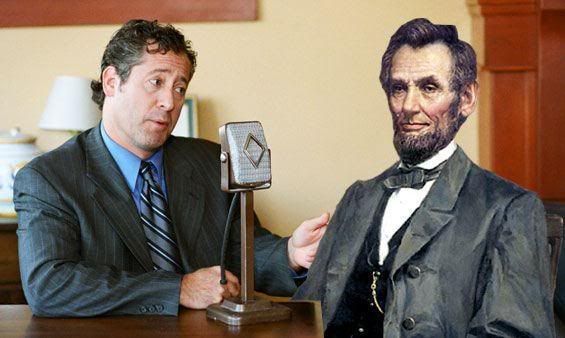
One of Stusser’s most popular projects, The Dead Guy Interviews (Penguin, 2007), examines 45 of the most accomplished and notorious deceased personalities in history. The genius behind the book is Stusser’s refreshing approach to writing a biography. This modern platform utilizes a “Tonight Show” approach in getting the truth out about these historical figure heads. The present-tense, personal interviews he conducts makes the reader feel as if the historical figure it sitting right next to him.
“I loved the research part and learning about these people and bringing humor into it,” Stusser says. “The interviews are historical, hysterical and great conversational fodder. If you ever wondered what it would be like to have dinner with anyone in history, now you’ll know.”
The first dead guy interview appeared as a column for mental_floss, a bi-monthly magazine that examines the lighter side of life’s toils, throws cranial factoids in the mix and purees it with a hint of stuff you might not need to know, but will make you feel better once you do. Gaining the attention of an editor at Penguin, the book turned the freelance journalist into a bona fide author who is sought after by universities and embraced by scholars who use the book as an educative tool.
In a writer’s interview on his website, Stusser points to Honest Abe as the nicest dead person he has interviewed. “He’s an incredibly bright fellow and a great president during the roughest of times. He’s also got a helluva sense of humor. When we were talking about an opponent who called him two-faced, he said, ‘If I had two faces, do you think I’d be using this one?’”
Stusser did discard several well-known figures for the first anthology, including Jesus, for apparently being “miffed about being constantly misquoted”, Gandhi, Helen Keller, Aristotle and Elvis, but only because “he’s not dead yet,” Stusser joked in the article. He says there are still plenty of dead people to interview, so there just might be a Volume 2. “It’s not like they’re going anywhere.”Video: A hilarious interview with Mongolian emperor Genghis Khan from Michael Stusser's new book The Dead Guy Interviews.

Board Games Meet Today’s Critical Issues

Not one for marginal involvement, Stusser found a niche into our homes as the creator of four board games that have found a large fan base around the country. In 1990, he released EARTH ALERT, a provocative, entertaining game that focuses on the new millennium. With four engaging categories, Stusser’s vision was to inform while having fun and to actively involve participants in saving the planet. The innovative game was recognized with a Parents’ Choice Award.
Born and raised in Seattle, Stusser spent much of his childhood in the great outdoors. “My parents were wonderful mentors. Their inspiration for me was day hiking in the Cascades and around the Pacific Northwest. I remember there would be clear-cutting from left to right and I would say to my parents, ‘Oh, I thought Weyerhaeuser was the tree growing company.’ [That's when] I realized business clashes with the environment. My parents were very progressive, so they passed those observations onto me growing up.”
Stusser’s motivation to increase dialog about the critical issues of our times began in the environmental movement at the University of California at Berkeley. Empowering individuals to make change in struggling times, Stusser worked as a political organizer and lobbyist for the Public Interest Research Groups (CalPIRG, MASSPIRG and USPIRG), Greenpeace, Rock the Environment and was a CORO Fellow graduate in Los Angeles in 1989.
Stusser’s second board game was a team effort with Gary Trudeau. The Doonesbury Game, an entertainment equivalent of three full sets of tennis, engages participants in discussions about some of the most critical issues of our times, such as handgun control, the deficit and virginity. Despite the heavy subject matter, it won Party Game of the Year after it launched.
“I was a Doonesbury fan for a long time and knew all [Gary Trudeau's] stuff,” Stusser says. “It was a little intimidating at first when we met, but clearly, when we walked him through the process, he had a great sense of humor about it.”

Stusser also created BumperCompass in 2000, which allows players to see the annual Seattle Bumbershoot Arts Festival by participating in fun, interactive activities throughout Seattle Center. And, Hear Me Out hit Starbucks stores throughout the nation in May 2004, quickly becoming one of the top-selling games in the country. The purpose of the game is to send players away entertained, educated and armed with juicy, compromising information about fellow players.
“In these economic downturns, I’ve been reading about families at home playing games and cards. I really like the fact that we’re returning to a time where you can turn the T.V. off and get to know your family again through simple games,” says Stusser, who, at 44, finds himself at a midway point where his life as a satirical journalist, author, actor and family man is just scratching the surface.
“Getting older, I hope there’s more humor to engage in. What I find is time to still maintain my humor. When I see authors with 30-plus books out there, I think about my one book and realize, geez, I better get moving!” Stusser jokes. “At this venture in my life, I feel this is the beginning to do more work. What was amazing about The Dead Guy Interviews was that I found myself amazed on how prolific their lives were. Mozart died at 36, but, my god, by the time he was six, he put out eight symphonies. Compared to their work ethic, I’ve learned that I better keep cranking out important stuff that matters.”


© 2/23/2009

Shyan Selah’s Hip-Hop Activism

by Ramon Shiloh

Shyan Selah’s love for people is changing lives by the thousands. “When I say I love people, I mean that in all aspects. The good, the bad and all that comes with basic human nature and instinct,” Shyan explains. “I think what makes me unique is that I am sincere with that love of people globally, so it allows me to communicate where no individual is left out. I try to bring that out in my music, my outreach and my philosophy to art.”

As President and CEO of the entertainment company Brave New World (BNW), Shyan has built a successful, multi-faceted enterprise in the last decade that not only operates as a record label, but also offers its artists management, consulting, media and marketing services, as well as music and film production. The company even runs a publishing division.
“Brave New World represents two words – be brave. We want to exemplify the need to reach your potential at any phase of your life,” explains Shyan, who believes that when you become content, you stop challenging yourself, which allows mediocrity to set in. “As a songwriter, teacher or any kind of artist, if you give yourself an opportunity and stay at your bravest level of self, you can make miracles happen every moment of your life.”
This is why Shyan’s heart was aching when he turned on the news February 8 to learn that 19-year-old Chris Brown, a Grammy-nominated singer, songwriter, dancer, video director and actor, was being accused of assaulting his girlfriend, Rihanna, another hip-hop singer. If found guilty, his clean-cut image will be tarnished forever, sending his record deal and pending endorsements with companies such as Wrigley Chewing Gum down the drain.
“There was no reason for him to do this. If Chris Brown had spent a weekend with me, this wouldn’t have happened,” Shyan claims. “He holds the power of outreach for those who have nothing. His Grammy performance should have been skipped because he chose to rock an alternative school for expelled or suspended youth versus skipping it because he got thrown in jail.”
“If you have an artistic gift, there’s a spirit behind that, behind those songs and behind the fans that love you,” he continues. “There’s a responsibility that comes with being an entertainer. That responsibility comes with being a progressive, evolving individual in your own spiritual walk.”

Tackling Youth Violence

Shyan is using his ability to communicate through hip-hop to inspire teens who are affected by violence, whether it is parental negligence, drugs, gangs or physical abuse. Shyan explains that teens need intervention or they are likely to give up on themselves.
“The violence factor is what I wanted to tackle head-on because today there are a lot of angry, frustrated kids mirroring an angry, frustrated society. There’s not a lot of knowledge being shared with teens to get an understanding of their role in America. Kids today are so on edge, all it takes for them to snap is a glare, a word or an emotional spark that could lead them drawing a gun,” Shyan says sadly.
Shyan’s activism and entrepreneurial approach to prevent teen violence and encourage youth to think about their individual accountabilities has garnered high praise from political figures, such as Governor Christine Gregoire, as well as local youth organizations, including the Southwest Boys & Girls Club in King County.
In September 2008, BNW decided to partner with the club in White Center after a string of gang-related incidents impacted club members. BNW has pledged to provide meaningful workshops that utilize music, entertainment and pop culture as an educational format. Executive Director Emily Slagle says the partnership between the two organizations was a “no-brainer.”
“I heard about Shyan and his goals for the Seattle community using hip-hop to engage youth in making positive life choices,” Slagle says. “We discussed how we could partner in teaching kids alternatives to being involved in gang activity, which directly affects the teens and youth of our community.”

Later that month, BNW hosted a Stay in sChOOL event at the University of Puget Sound’s first home football game to influence the use of positive and motivational edutainment in youth curriculum. At the first of 70 high school and 20 college visits, Shyan was joined on the field by Governor Christine Gregoire, her daughter Michelle and Melissa Topacio Long, Washington state’s Democratic Party youth outreach director who all praised BNW’s efforts. Shyan opened the game with the National Anthem and performed his new hit single “Hollywood Blvd” during the half-time show.
“I raise the question every day: Why are people not stepping up to help these kids discuss the real issues in life? The root issues of frustration are why I believe I was meant to do the work I do today,” Shyan explains. “When you see a child finally understanding their role as a budding, responsible contributor in society, it’s a powerful moment to behold.”

From Seattle to Young Black Hollywood

Born in a small town in Madisonville, Kentucky, Shyan’s family moved to Seattle in 1980s, which he believes played an important role in his artistic development. “Seattle is almost cultish. It’s a great city to develop a musical niche. The influential properties exist all around – it’s grey, it’s rainy, everything’s indoors, the people are moody, opinionated, but somehow still liberal. Seattle is a really cool place to formulate who you are. Seattle made an imprint on me. When I moved to Los Angeles to sign my first deal, there was so much Seattle in me. It came through constructively in negotiating and business.”
Shyan also credits his parents with cultivating his artistic confidence. “Whether they were actually aware that they were an influence on me or not, they were definitely at the heart of it all. My father was a huge album collector of all genres of music and I would fall into the art work of those album covers and get lost in them. My mother was a naturally gifted person and to hear her sing early in the morning was incredible. She would just adlib around the house and I would be forced to pick that up.”

His older brother was also instrumental in his artistic growth, introducing him to the early forms of hip-hop in the mid-1980s. “When I was growing up, it was groups like Jodeci, Shai and Boyz II Men that could croon their way to the top of the charts, so I was trying to develop a singing background with rap, which seemed to be tricky, but I managed to exercise those two art forms in time.”
Shyan says he discovered his creative voice when he was ten years old, but never really got comfortable with singing until he reached his teen years. Competing in talent shows is where he defines his true beginning. “It shocked everybody who knew me that I gave up ball for good. But, I believed I had this artistic edge that needed to be expressed from the affinity for people, spirituality and community,” he explains.
Shyan’s creative path led him to friends who were already immersed in the Hollywood scene. “The mid-‘90s was an era known as ‘Young Black Hollywood’, where the Wayans Brothers, Moesha and a lot of Black actors were doing well. I was highly involved in that scene. My friends were very astute in various art forms when I got to Los Angeles. Next thing I knew, I was modeling, on TV, acting and performing.”
But, Shyan says his fairytale suddenly came crashing down the moment reality smacked him in the face. “The driving force that brought me back to Seattle was hardship. While on tour, I made the blessed mistake of impregnating an old college girlfriend. I had this career that was leaping to great heights, but I had to make a moral decision for myself, so I chose to come back home to Seattle. Always looking for a challenge, I thought I could bring a little bit of Hollywood back home. That’s where the real work began in trying to be a parent and build a Brave New World.”

Creating a Brave New World

Shyan says he had a magical moment one day when he was researching charitable contributions on the internet. After reading about the Jimi Hendrix Foundation, he shot off an email explaining BNW’s community outreach programs through music. In less than a month, he found himself sitting as a board member for the foundation.
During this time, the board was charged with rebranding Hendrix to the world in order to introduce the man behind the rock and roll legend. Shyan helped negotiate deals with companies such as Friend or Foe and Barneys New York, which agreed to sell a T-shirt line that presented a bolder image of Hendrix into the marketplace. Shyan is also the driving force behind The Foundation, a series of Hendrix tribute records that is currently in production, which features original music performed by today’s top artists.
In late 2008, Shyan stepped down from the board to focus on his other community outreach efforts, but he says he will continue his work with the Hendrix name by partnering with Liquid Hendrix and Authentic Hendrix, where he has pledged to foster community outreach through music/art workshops and other meaningful social programs.

At the same time, Shyan dropped his debut album, Brave New World, which delivers an edgy sound that infuses funk, rock and R&B inspired by the likes of Hendrix, Prince, Led Zepplin, Tupac and Marvin Gaye. He spent the last month performing at world-renowned and grassroot venues throughout the U.S. and abroad on his Be Brave Tour.
On his first single, “Hollywood Blvd”, Shyan sings about the glitz and glamour of Hollywood that is tainted by drugs, money and the destructive price of fame. After the track was featured on the hit CBS show Numb3rs, Los Angeles clubs and radio DJs took notice. Since then, the single has become a favorite at the hottest L.A. venues, including RnB Live Hollywood at Cinespace, Area, Mood, Forbidden City, Les Deux and Club Monte Cristo.
On January 26, BNW expanded its entertainment operations and community projects to Los Angeles, where the company will continue to offer an independent record label, as well as promotions, productions and media divisions. Shyan explains it is a necessary move if he is to continue in his quest to accomplish BNW’s global objectives.
“Being in the entertainment Mecca of the world gives us an opportunity to do even greater work,” he explains. “From Jimi Hendrix to getting my single on CBS, I was just looking to do the right thing – contribute. I had the right approach and magical moments came out of this.”

For more information about Shyan Selah and Brave New World: 888/927-2838, x130, or www.myspace.com/shyanselah.


© 2/16/2009